
When you need to get people safely up to valves, conveyors, tanks, or equipment, a stock “one‑size‑fits‑nothing” platform doesn’t cut it. Your floor is crowded, your clearances are tight, and you’ve got to work around existing structures, piping, and processes. You need platforms, catwalks, and ladders that are built to fit your plant—not the other way around.
That’s the kind of work we do every day. At AGI Fabricators, we design and build custom industrial work platforms that feel like they’ve always been part of your facility: solid underfoot, laid out the way your team actually uses the equipment, and built to hold up to real industrial use.
Platforms that match how your plant really works
On paper, it always looks straightforward: “put the platform here, run the stairs there.” Then you get out on the floor and you’re dodging overhead lines, squeezing past walls, and trying to give one landing access to three different spots at once.
We take all of that into account. When AGI builds a platform, the goal is straightforward: give your people safe, reliable access and make their jobs easier. That means:
- Landings sized for how operators actually work, not just minimum code
- Stairs, ladders, and handrails laid out with traffic flow in mind
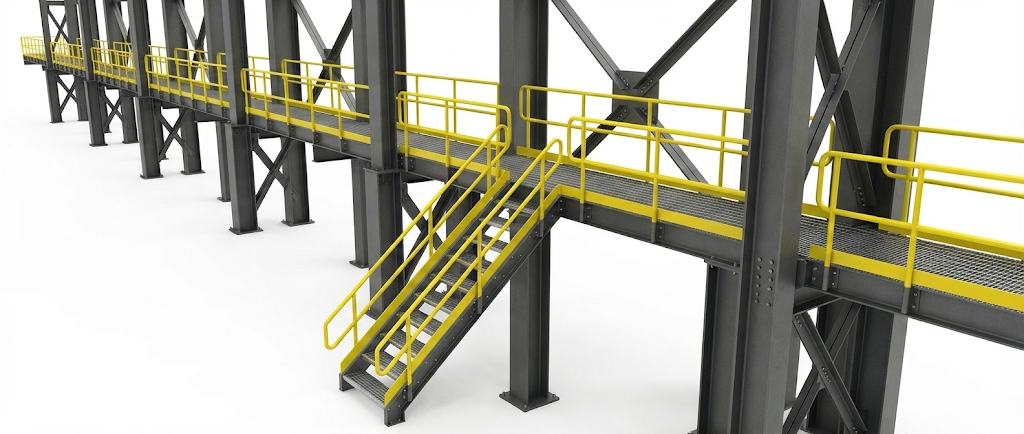
- Catwalks that keep you clear of conveyors, piping, and moving equipment
- Guardrails and toe boards where they’re needed, not just where they’re convenient to draw
You end up with a platform system that feels intuitive the first time someone climbs it.
Custom doesn’t have to mean complicated
Every plant is different, but the core idea is simple: you tell us what you need to reach, how you need to use it, and what you have to work around. We do the rest.
We commonly build:
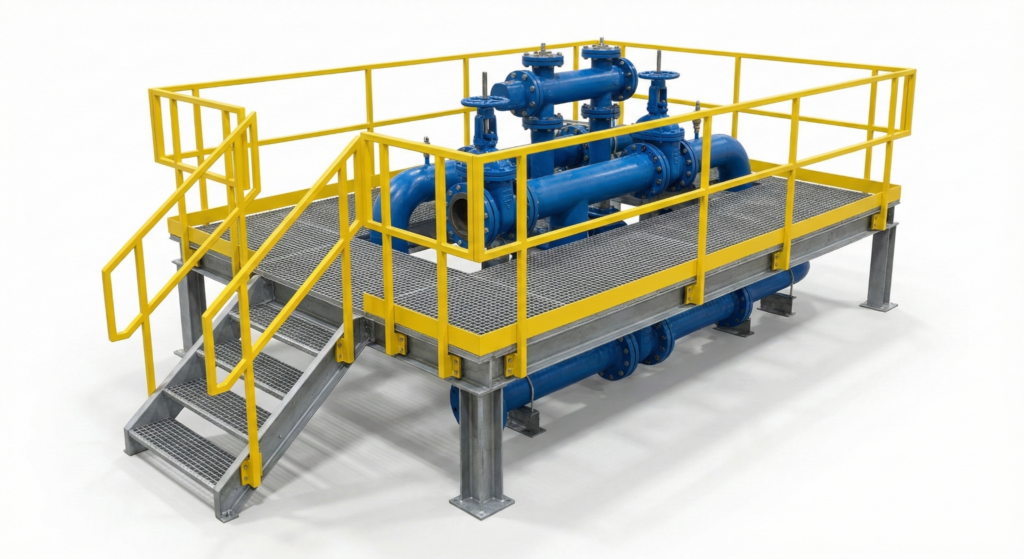
- Elevated platforms around tanks, mixers, and processing equipment
- Catwalks over production lines, conveyors, and transfer points
- Maintenance platforms and access landings for motors, drives, and filters
- Stair and ladder systems with integrated guardrails and handrails
- Multi‑level platform systems that tie several machines or areas together
You’re not starting from a blank page. We’ve done this many times across different industries, so we know the typical pitfalls and the details that make platforms easier to live with long‑term.
Plenty of platforms are technically “compliant” on paper but feel shaky and awkward in actual use. We build with the day‑to‑day reality in mind.
That shows up in the details:
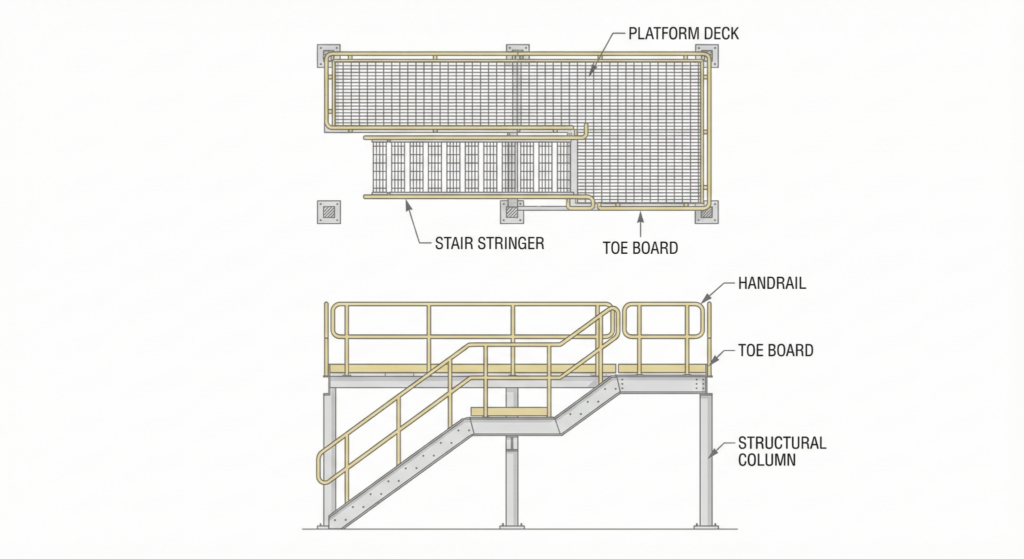
- Structural framing sized for real loads and regular traffic
- Grating and tread choices that balance slip resistance and cleanability
- Handrails that feel solid when someone leans on them, not flimsy or loose
- Connections and bracing designed to limit bounce and vibration
We work in carbon steel, stainless, and other materials depending on your environment and wash‑down or sanitation needs. The result is a platform that feels solid the first day it’s installed and still feels that way years down the road.
A practical process from concept to installation
You don’t have time for a drawn‑out project just to get better access to your equipment. We keep the process direct and predictable.
- Talk through the access problem
You tell us what you need to reach—valves, hatches, drives, filters, inspection points—and what’s in the way now. We look at your layout, your existing structures, and any drawings you have. - Lay out a workable design
We determine where platforms, catwalks, and stairs should go, how they tie into your structure, and how much room your people realistically need. The focus is on safe, comfortable access that fits into the plant you already have. - Engineer the solution
Our engineering team validates the design for structural integrity, load requirements, and code compliance. We finalize connection details, materials, and specifications so everything performs as expected in your operating environment. - Fabricate and prepare for install
Once the design is set, our team fabricates the platforms, stringers, handrails, and support steel. Components are built to fit, with connection points and details planned to make installation go smoothly.
You get a solution you can install with clear expectations on fit and function—no guessing and no patch‑on changes because something didn’t line up.
Designed with safety and maintenance in mind
A good platform does more than just get someone from point A to point B. It should make maintenance, inspection, and cleaning safer and more efficient.
When we build platforms, we think about:
- How often someone will be using it and what they’ll be carrying
- Where tools, parts, and test equipment need to be staged
- How easily operators and maintenance can see what they’re working on
- How to reduce awkward reaches, steep climbs, and tight turns on stairs
Those details directly affect safety and how long tasks actually take in the field. A few extra inches of landing space, a better stair orientation, or a well‑placed catwalk can have a bigger impact than most drawings show.
When a standard platform just doesn’t fit
There are plenty of “standard” platforms, stair modules, and off‑the‑shelf catwalk kits out there. They work fine in wide‑open spaces and simple layouts.
They don’t work as well when you’re trying to:
- Squeeze between existing structures
- Wrap around tanks, vessels, or unusual equipment
- Tie into older building steel or concrete
- Step over or under piping, cabling, or ductwork
- Serve multiple access points from one platform system
That’s where custom platforms earn their keep. You get something built to your exact dimensions, your clearances, and your processes instead of forcing a standard kit to “sort of” fit.
Let’s talk about the platform you actually need
If you’re tired of climbing makeshift ladders, working off temporary solutions, or fighting with a platform that was never really designed for your plant, it’s time to change that.
Tell us what equipment you need to access, what’s in your way, and how your people use the space. We’ll help you land on a practical platform layout and build it the right way.
Use the form on this page or give us a call to start the conversation about your next industrial work platform or catwalk project.